
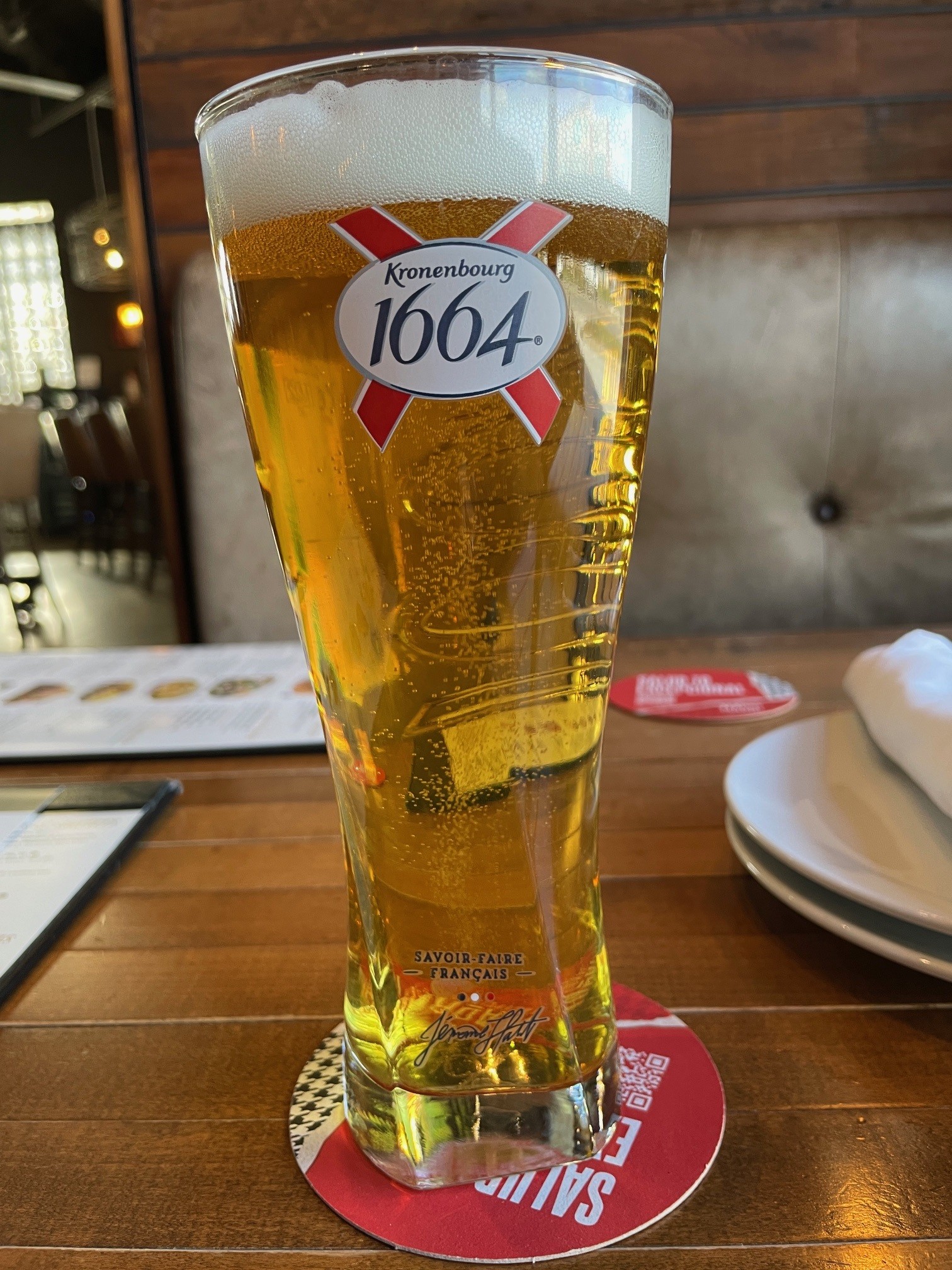


A French beer with a German name seems odd to me.* Why? Just in case you skipped history class that day, in the previous century the two countries had some relationship issues. I think they saw a counselor, or maybe that was a Chancellor? “De l’eau a coulé sous les ponts” as they say in Paris.**
Kronenbourg tell us that this brew is the result of “Savoir-faire Français”.** I’ve seen Kronenbourg 1664 around from time to time, here and there, as in everywhere all the time. Every beer store, LCBO, dicey diner, fancy pants restaurant, and backwoods bar seems to have it on ice, on tap or on display. It seems that Savoir-Faire is everywhere! ***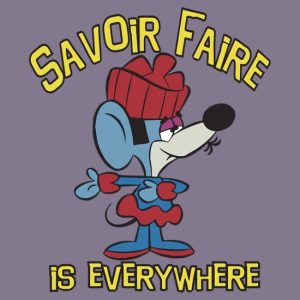
When it comes to French know-how I tend to think of art, food and the Eiffel Tower, but beer isn’t one of the first twenty things that come to mind. Will that all change with this sampling? One can hope.
A pretty pour of 1664, a tall tap for sure. Bright golden and very clear with bubbles and a fluffy white tête au-dessus. It has a light malt aroma, a touch grainy, almost wheat. First taste is a malt slight lager sweet, very mild bitterness and floral notes as well. A lot going on for such a pedestrian pint. The floral aftertaste is noticeable but not overbearing. In fact there is nothing overbearing about this brew. A European lager for the masses, and if they don’t like it, let them eat cake!****
*Editor’s Comment: A French beer with a German name owned by a Danish brewer. In 2008 they were acquired by Carlsberg.
**COMDB Translation Department: This is a common expression in France, the literal translation is “a lot of water has flowed under the bridge”. As for “Savoir-fare Français”, it means French know-how.
***Editor’s Comment: “Savoir-Faire is everywhere” was the catch phrase of the cartoon mouse bandit Savoir-Faire, from the classic cartoon Klondike Cat which was originally aired in 1966. Shorts later ran on the cartoon TV series Underdog.
****Editor’s Comment: The saying “let them eat cake” is widely, and incorrectly, attributed to Marie Antoinette. It was actually written by Jean Jacques Rosseau decades before she became Queen. The saying implies that Royalty has no concept of the suffering of the starving masses.
0 Comments